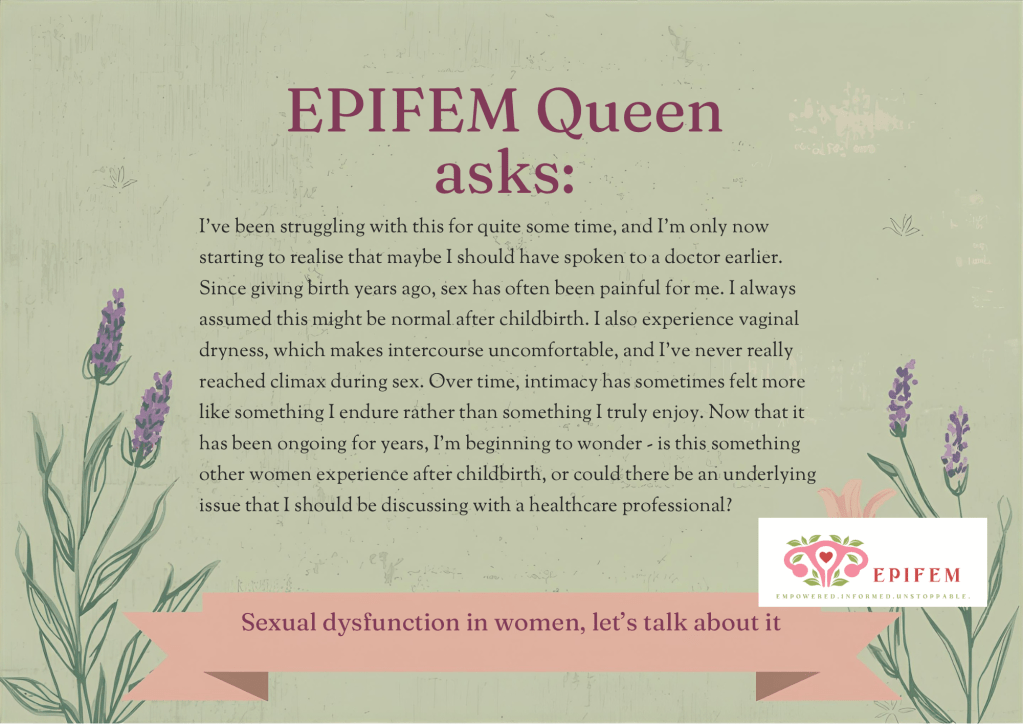
Sexual health is an important part of overall wellbeing, yet it remains one of the least talked about aspects of women’s health.
Many women quietly struggle with sexual concerns -pain during intercourse, reduced desire, difficulty becoming aroused, or trouble reaching orgasm. Because these conversations are often considered taboo, women may assume they are alone or that their experiences are something they simply have to live with.
The truth is that sexual dysfunction in women is common, real, and treatable.
At EPIFEM, we believe women deserve accurate information and safe spaces to talk about their bodies without shame.
Let’s unpack what sexual dysfunction is, why it happens, and what can be done about it.
What is Female Sexual Dysfunction?
Female sexual dysfunction refers to persistent problems during any stage of the sexual response cycle that cause distress or difficulty in sexual relationships.
Clinically, it is often grouped into four main categories:
1. Sexual Pain
Pain during sexual activity is one of the most common concerns women report. This may include:
Pain at the vaginal opening , Deep pelvic pain during penetration, Tightening of pelvic muscles, Burning or irritation in the vulva
Some causes include vaginal dryness, infections, pelvic floor muscle dysfunction, hormonal changes, or conditions such as vulvodynia (pain in vulva)
2. Low Sexual Desire
Low sexual desire refers to a persistent lack of interest in sexual activity or sexual thoughts that causes personal distress.
Sexual desire naturally fluctuates throughout life, but when the loss of desire becomes troubling, it deserves attention.
3. Difficulty With Arousal
Some women may experience:
Difficulty becoming physically aroused ,Reduced vaginal lubrication and Reduced genital sensation
Arousal involves complex interactions between the brain, hormones, emotions, and blood flow.
4. Difficulty Reaching Orgasm
Some women may experience delayed orgasm or inability to reach orgasm despite adequate stimulation.
This may occur lifelong or develop later in life and is often linked with other sexual difficulties.
What Causes Sexual Dysfunction?
There is rarely a single cause. Female sexual health is influenced by a complex interplay of physical, emotional, hormonal, and relational factors.
Physical causes
Some medical conditions can affect sexual function, including:
Hormonal changes (especially menopause) , Diabetes ,Thyroid disorders and Chronic illness Pelvic floor dysfunction and Certain medications
Psychological causes
Emotional wellbeing plays a major role in sexual health.
Factors may include:
Stress ,Anxiety, Depression , Past trauma ,Body image and concerns of Relationship difficulties
Our brains are actually one of the most important sexual organs – if the mind is not at ease, the body often follows.
Hormonal changes
Hormones such as estrogen and testosterone influence libido, vaginal lubrication, and sexual response.
Changes during:
Pregnancy, Postpartum period , Breastfeeding ,Perimenopause and Menopause
can all impact sexual function.
How Is Sexual Dysfunction Treated?
The most important thing to remember is that sexual dysfunction is treatable.
Treatment depends on the underlying .
Medical treatments
These may include:
Treating underlying medical conditions, Adjusting medications that affect sexual function ,Hormone therapy in appropriate cases Vaginal moisturizers or lubricants and Management of pelvic pain conditions
Pelvic floor therapy
Pelvic physiotherapy can be extremely helpful for women experiencing pain with intercourse or pelvic muscle dysfunction.
Psychological support
Counselling or sex therapy can help address:
anxiety around sex ,relationship challenges, past trauma, communication difficulties with partners
Lifestyle and relationship factors
Sometimes small changes can make a big difference:
stress management improving sleep strengthening, emotional intimacy open communication with partners
Fitness habits
Why These Conversations Matter
Many women suffer in silence because sexual concerns are still surrounded by stigma.
But sexual health is not a luxury – it is a legitimate part of health care.
If you are experiencing sexual difficulties, know this:
You are not alone Your concerns are valid Help is available
At EPIFEM, our goal is to create a space where women can ask questions, learn about their bodies, and feel empowered to seek the care they deserve.
Your body should never feel like a mystery you have to navigate alone.
Let’s keep the conversation going. Share these with your female circle.
Love Dr Nshali

Discover more from EPIFEM HEALTH
Subscribe to get the latest posts sent to your email.
 EPIFEM HEALTH